Oiseaux Morin-Heights Birds
May 31, 2025 - May 25, 2026
An art and science project about the birds of Morin-Heights, a municipality in the Laurentian region of Quebec.
Goal: to explore, celebrate, and help the birds of Morin-Heights through education, creation, and local activism.
A Facebook group was created for the project to post all the events.
https://www.facebook.com/groups/1215020710013143
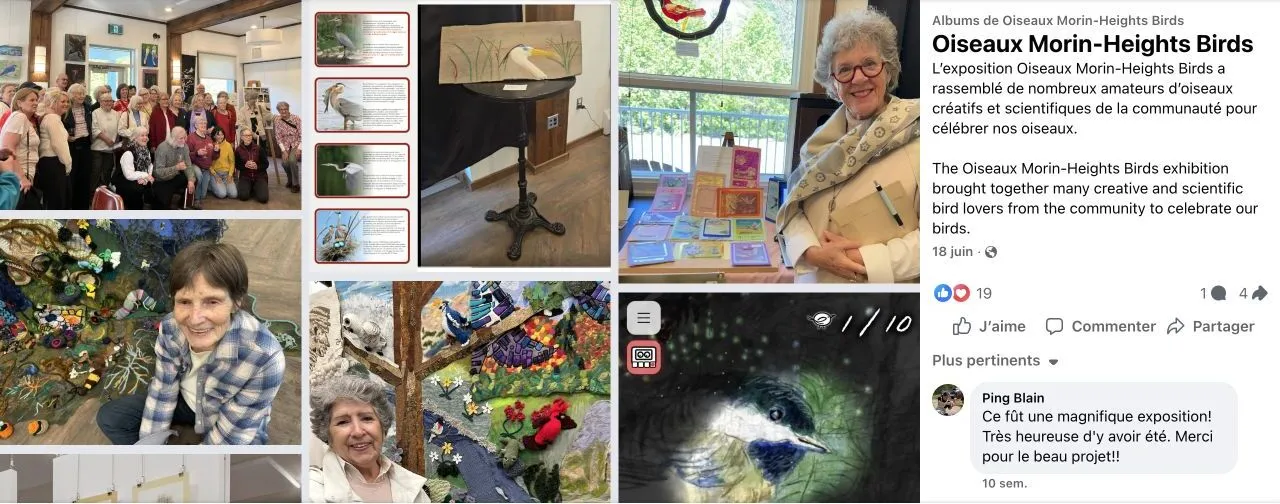
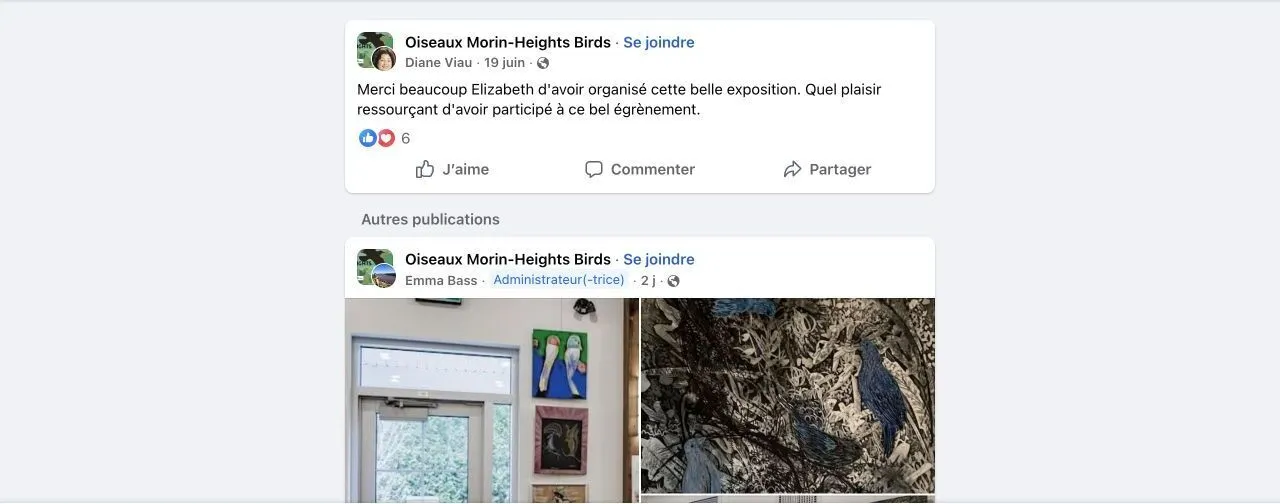
After a yearlong schedule of workshops, outings, and lectures, the participants’ projects were presented in an exhibition at the Chalet Bellevue in Morin-Heights. Read the exhibition press release here:
Personal works
Section titled “Personal works”Across Unmarked Borders
Section titled “Across Unmarked Borders”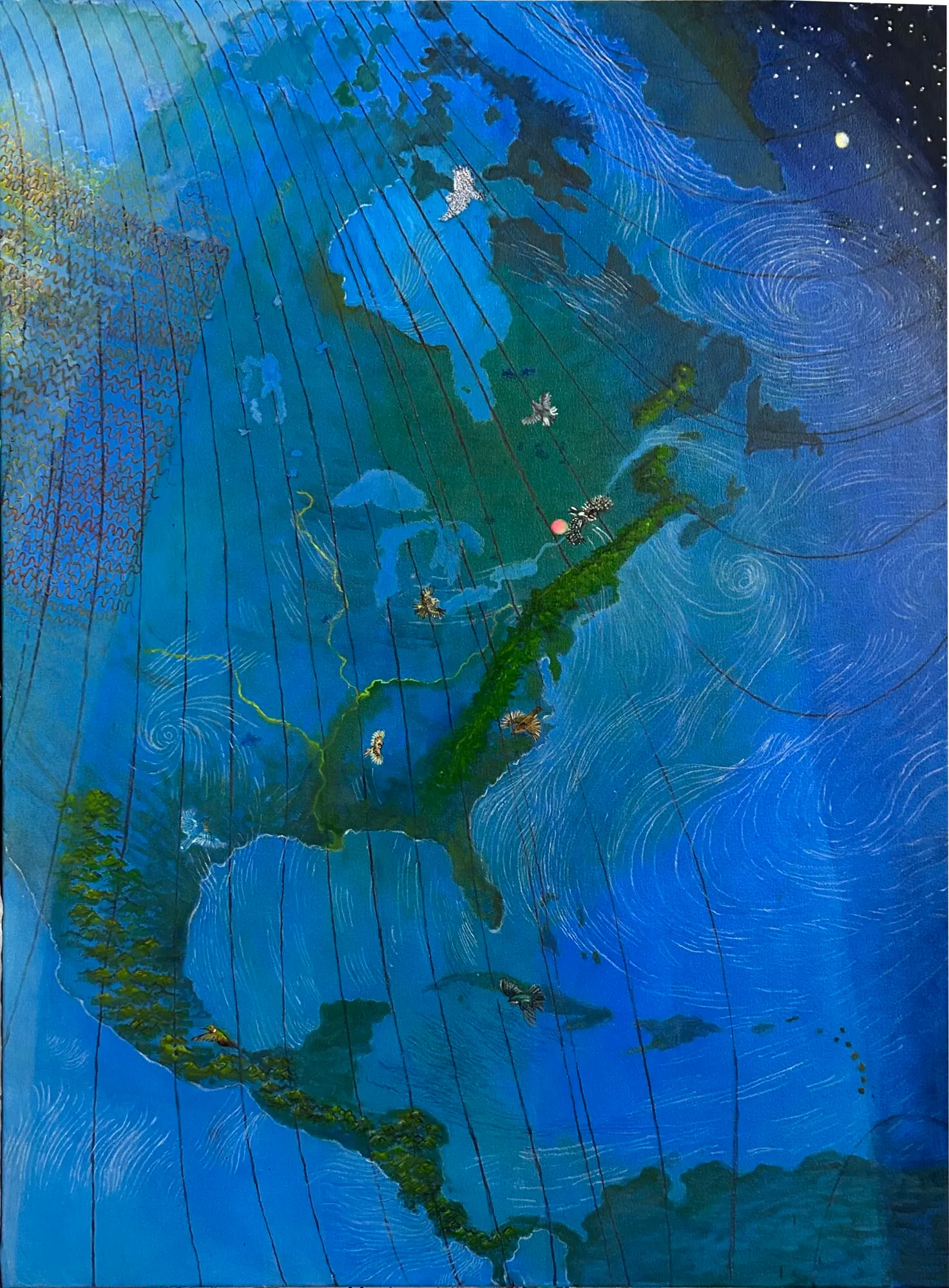
The influences on bird migration: magnetism, mountains, rivers, the moon and stars, night and day, polarized sunset light, stars, wind currents
Indicated on the map are migration destinations of 9 birds of Morin-Heights: Indicated on the map are the migration destinations of 9 birds from Morin-Heights: the snowy owl, the dark-eyed junco, the hairy woodpecker, the song sparrow, the pine siskin, the American robin, the Eastern bluebird, the ruby-throated hummingbird, and the tree swallow.
Memories of birds of Morin-Heights
Section titled “Memories of birds of Morin-Heights”
Texts and images concerning the impact of habitat destruction on local birds.
Kildeer
Section titled “Kildeer”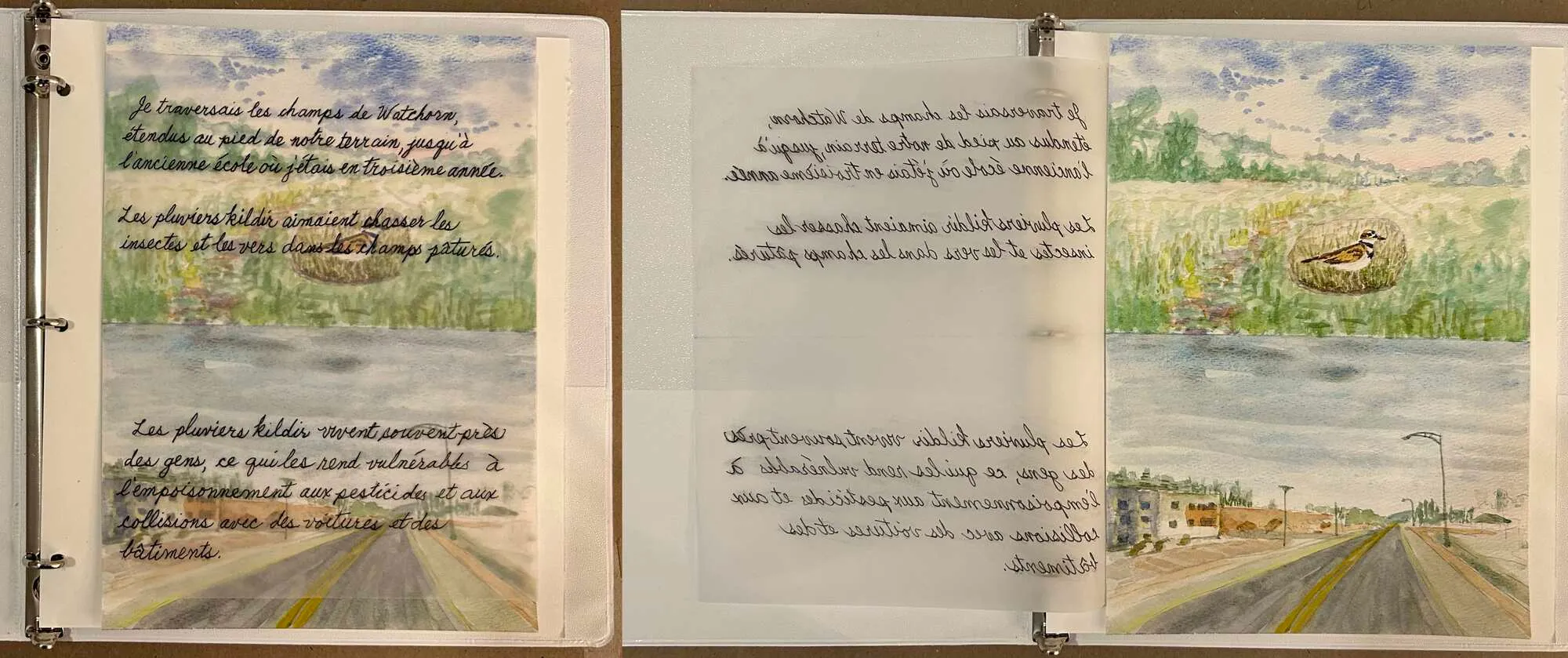
I would walk through Watchorn’s fields, stretched out at the foot of our property, to the old school when I was in third grade.
Kildeer liked to hunt insects and worms in the stubbly fields.
Killdeer often live near people, making them vulnerable to pesticide poisoning and collisions with cars and buildings.
Bank swallow
Section titled “Bank swallow”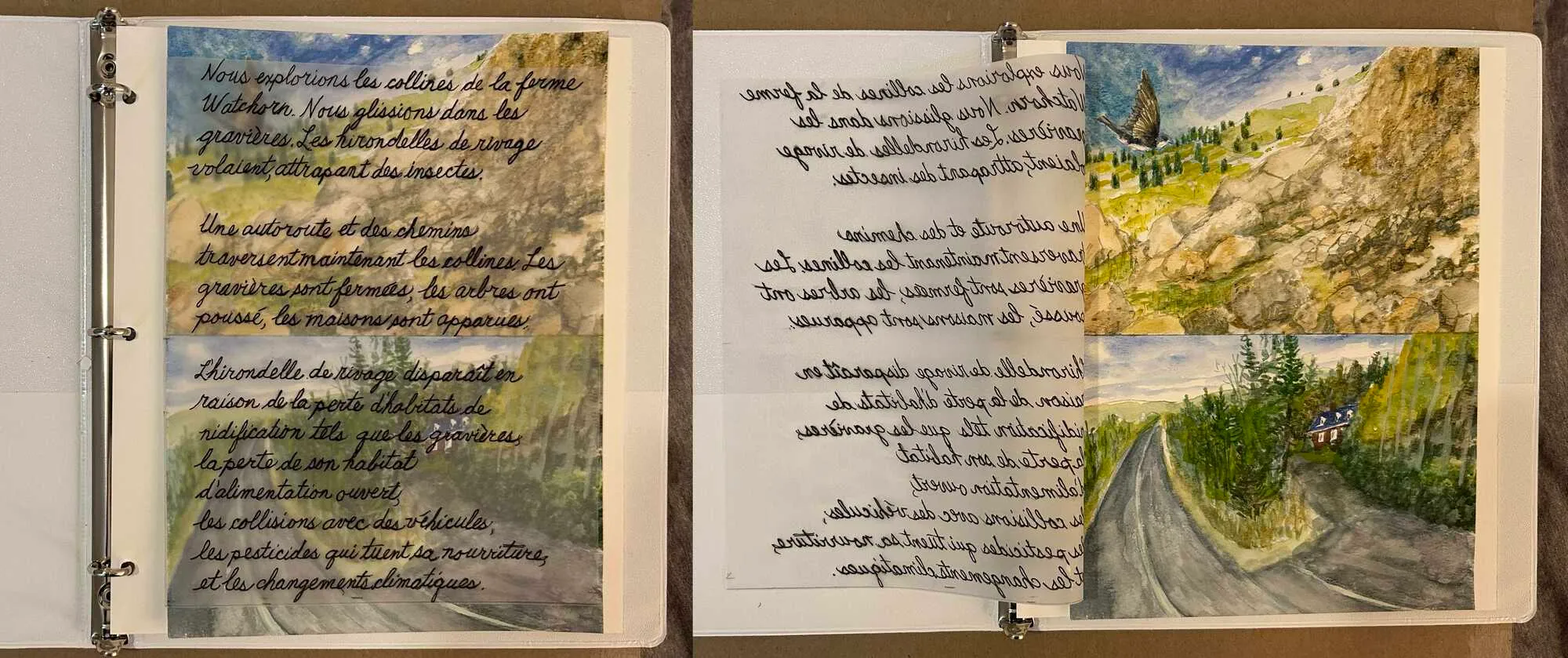
During summer vacation we explored the hillsides above Watchorn’s farm and slid down the sides of the gravel pits. Bank swallows darted overhead catching insects.
A highway and residential roads now cut across the hillsides. The gravel pits have closed, trees have grown in, houses have appeared.
Threats to the rapidly disappearing bank swallow include loss of nesting habitat of vertical sand or mud banks, bluffs and gravel pits, loss of open foraging habitat, collision with vehicles, pesticide killing their food, and impacts of climate change.
Kingfisher
Section titled “Kingfisher”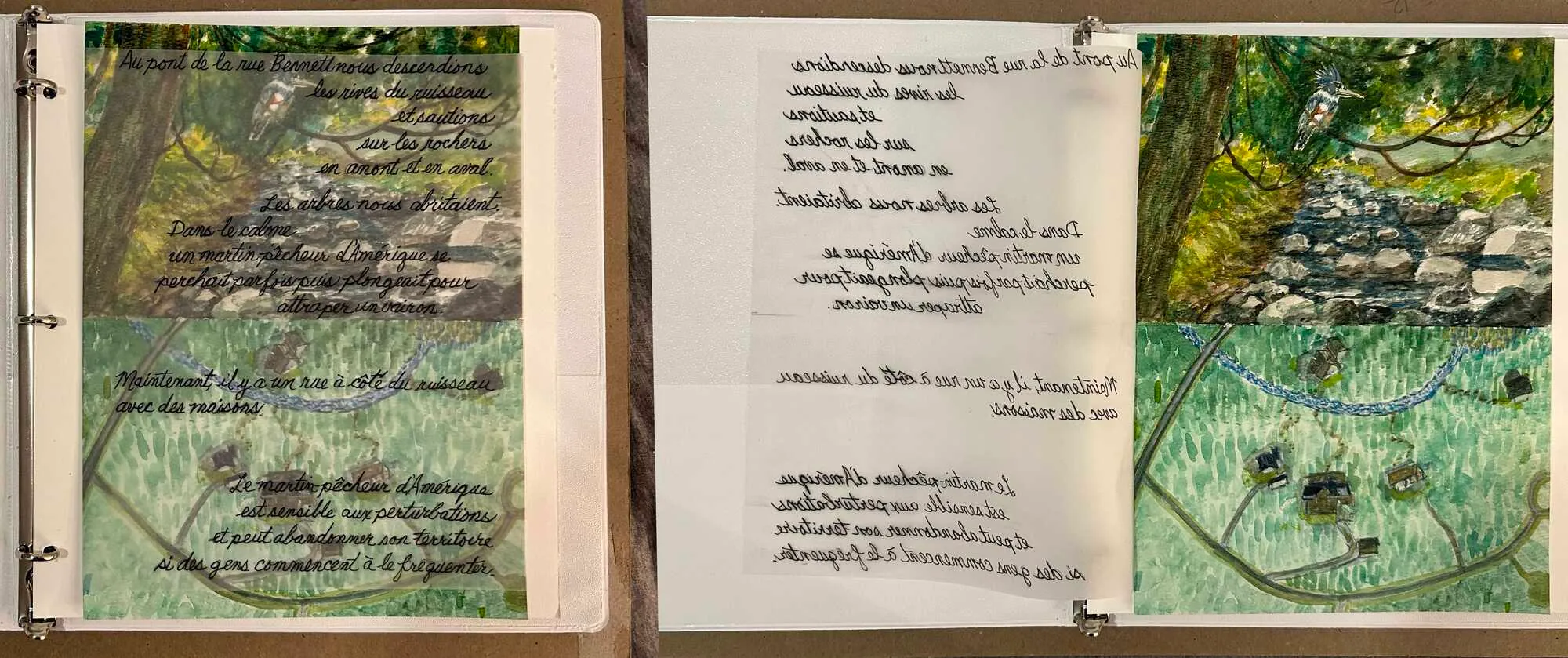
At the Bennet Road bridge we would clamber down the banks of the stream and hop on the rocks upstream and downstream, the light filtering through the overhanging trees that surrounded and sheltered it. In the quiet, a kingfisher would sometimes perch then dive to catch a minnow.
Now there’s a road beside the stream with houses.
The belted kingfisher is sensitive to disturbance and may abandon his territory if people begin frequenting it.
Barred owl
Section titled “Barred owl”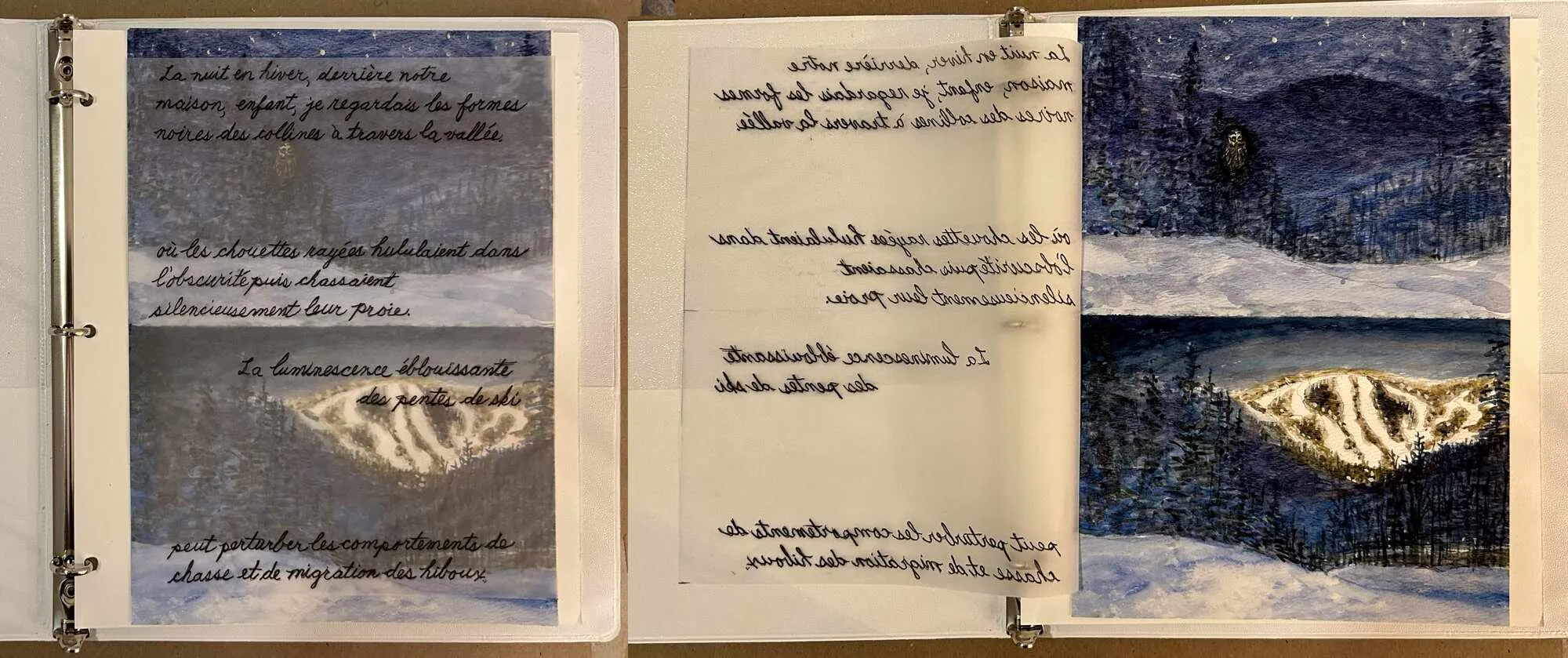
The dazzling luminescence of ski slopes can disrupt owl hunting and migration behaviors.
At night in the winter, from behind our house, as a child, I could see the black shapes of the hills across the valley where the barred owls would hoot in the darkness then silently hunt their prey.
The dazzling luminescence from ski hills can disrupt the hunting and migratory behaviours of owls.
Collaborative projects
Section titled “Collaborative projects”Oiseaux cachés
Section titled “Oiseaux cachés”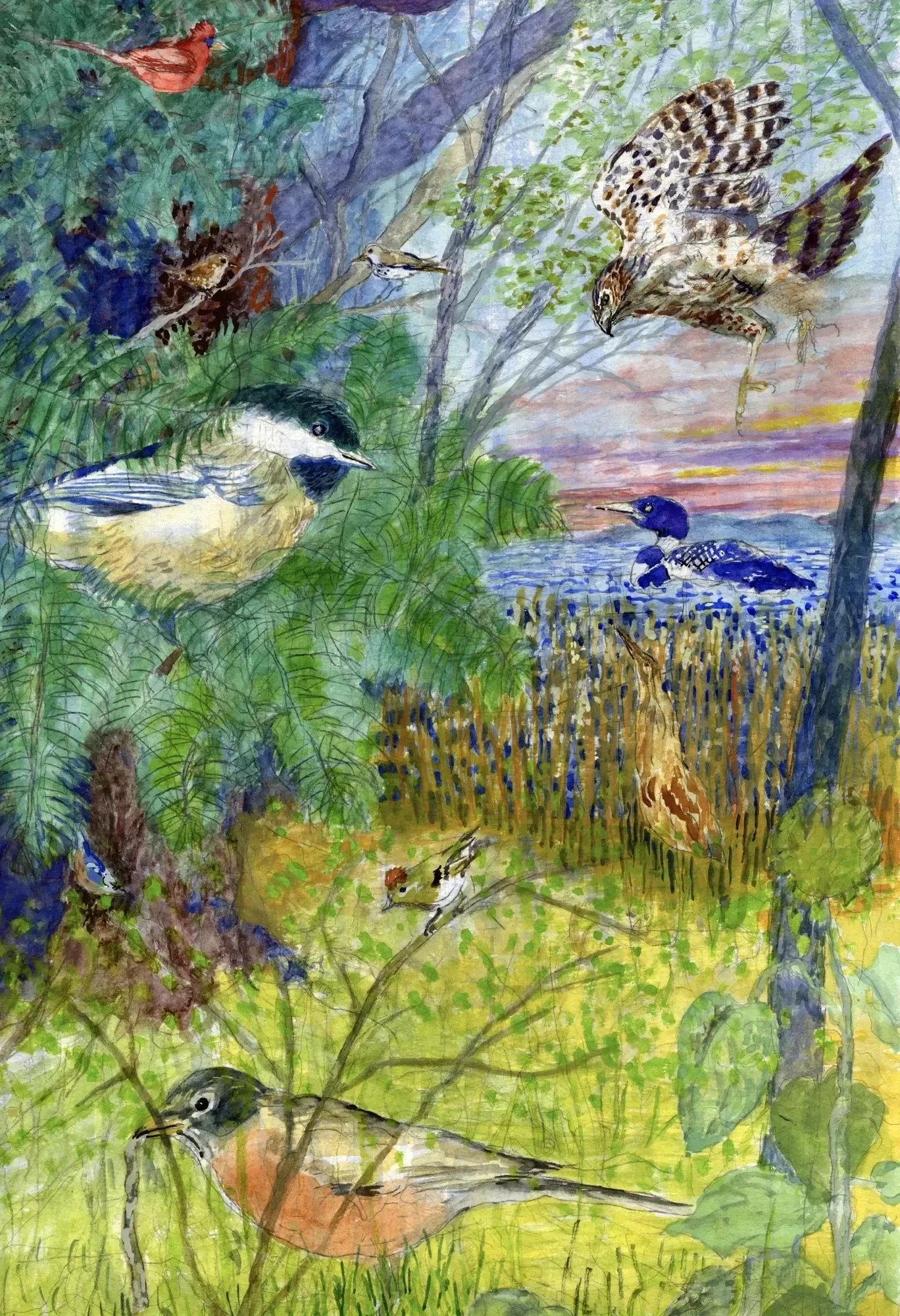
An online game in which players discover ten birds of Morin-Heights, painted in their natural habitats, and listen as their songs emerge.
https://www.elizabethwhalley.com/fr/projects/oiseaux-caches/
Community drawing: the birds of Morin-Heights
Section titled “Community drawing: the birds of Morin-Heights”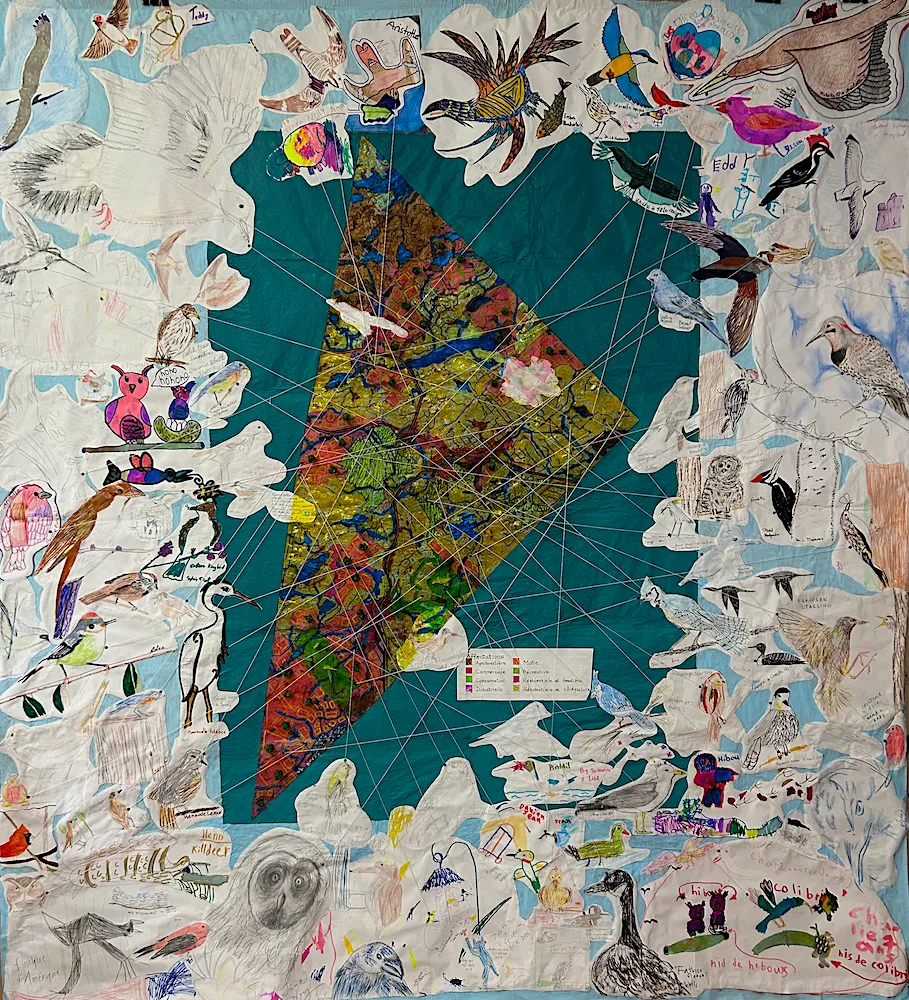
Each bird is connected with a thread to the habitat on the map where it can be found.
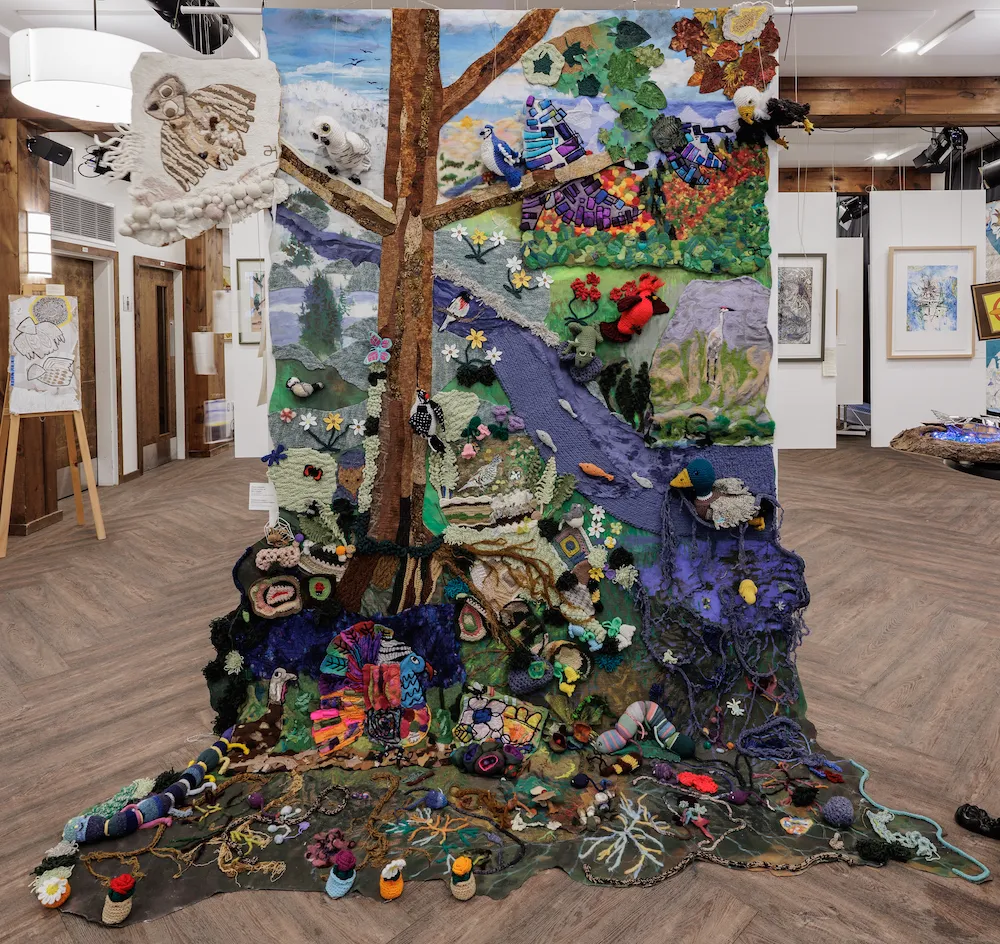
Crafted Birds: birds in a Laurentian ecosystem
Section titled “Crafted Birds: birds in a Laurentian ecosystem”